
What a safety inspection helps uncover
Hidden wear made visible
We look for seals, parts and heat damage that can be missed in everyday use.
Alarm checks included
The carbon monoxide alarm is considered as part of the wider stove safety picture.
Clear next steps
You get practical advice on repair, maintenance or further chimney checks if needed.
Looking at the stove as a whole system
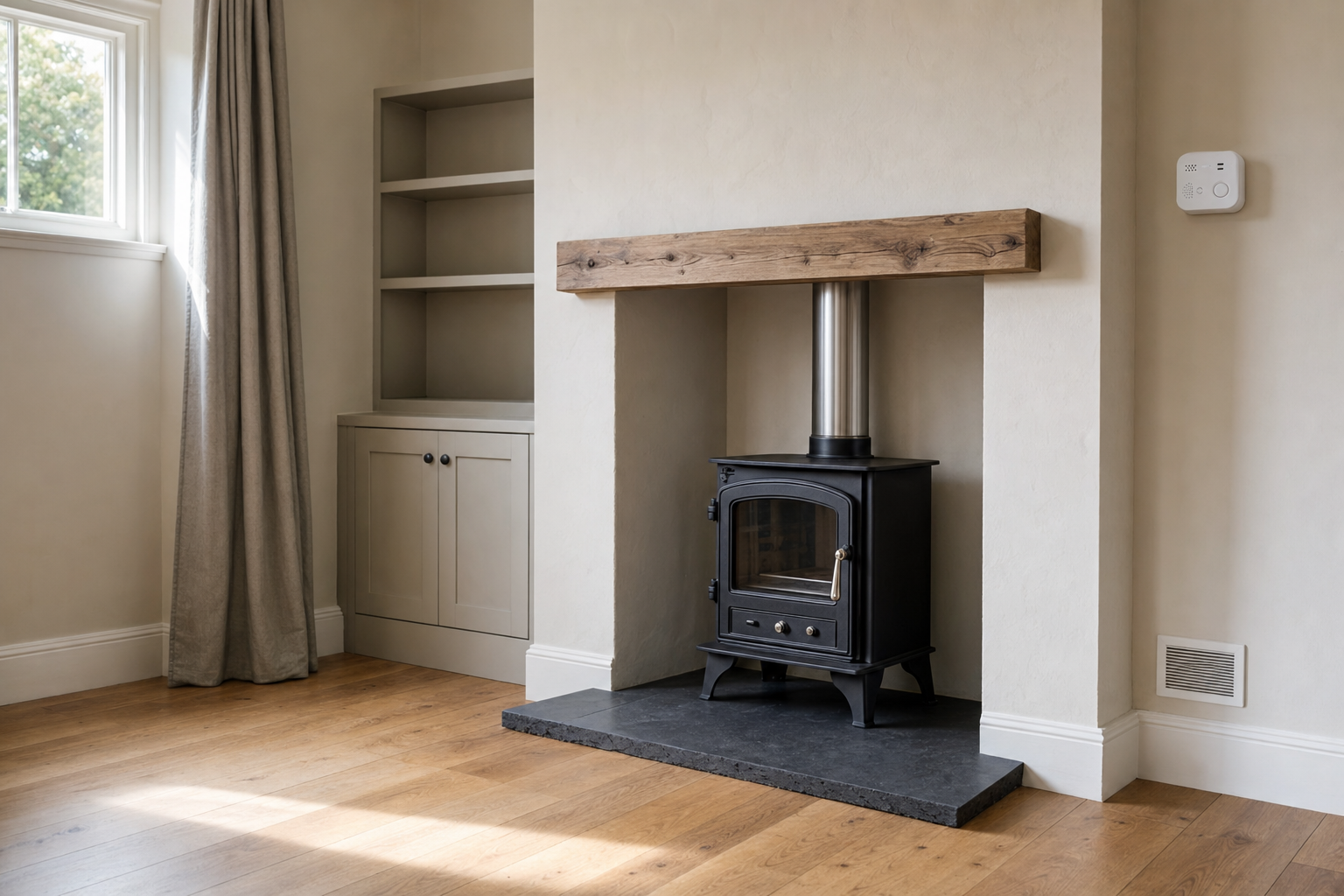
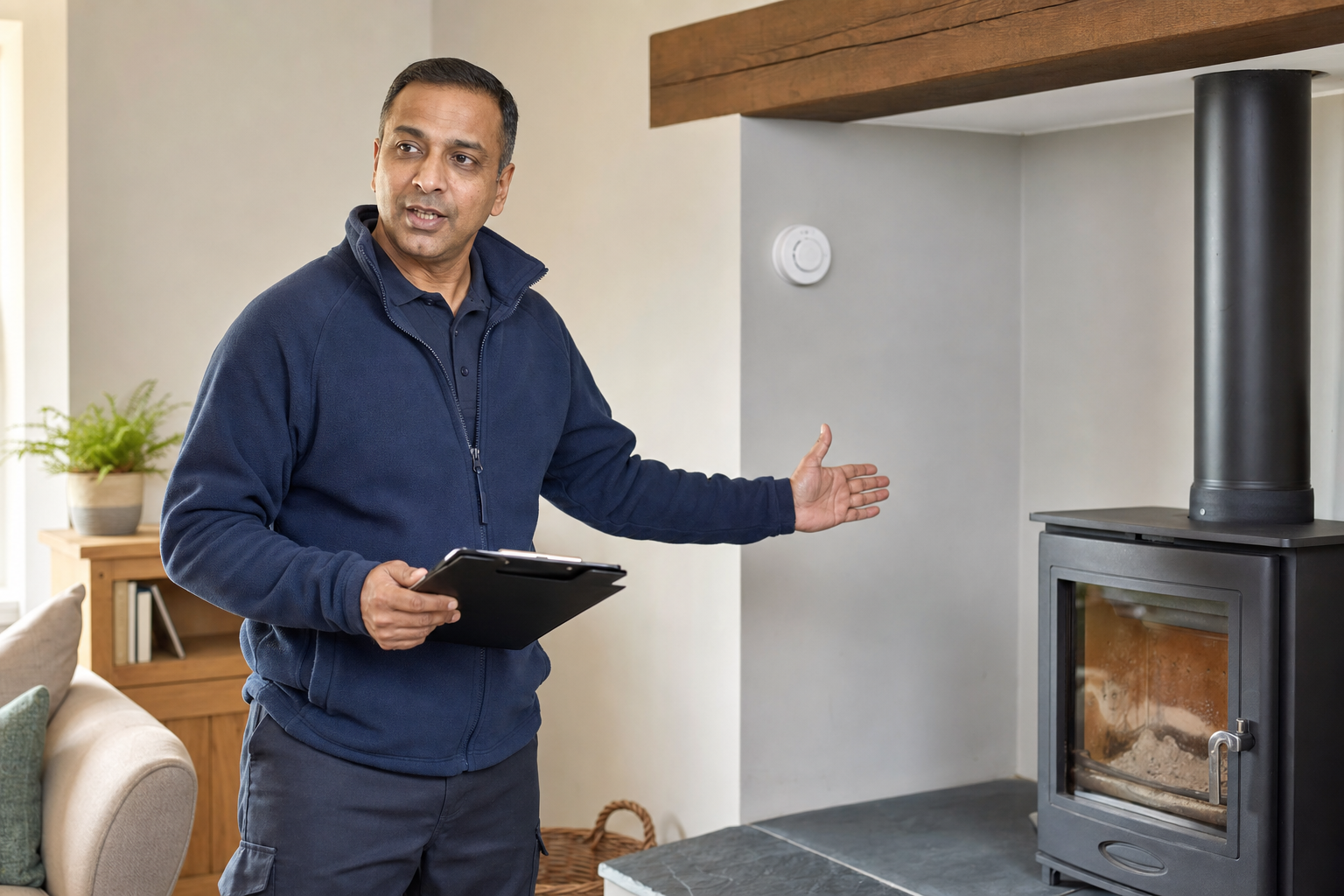
A stove may light, but that does not always mean the installation is sound. A safety inspection looks at the appliance, hearth, clearances, ventilation, flue connection and the visible condition of the chimney as one working system. We check for damaged components, poor seals, signs of overheating, dirty burning and deposits that should not be there. The carbon monoxide alarm is part of that picture too, because its condition and position matter more than many homeowners realise. Choosing Hot House Stoves means getting a practical inspection rather than vague reassurance. From our Gainsborough base, we carry out checks that help you understand whether the stove is operating safely or whether further work needs considering.
Useful when you are unsure what you have
Safety checks are especially helpful if you have moved into a property with an existing stove, if the appliance has started behaving oddly or if you simply do not know whether the set-up was fitted properly in the first place. We explain the findings clearly and point you towards maintenance, repairs or more detailed chimney investigation if that is the sensible next step. People come to Hot House Stoves when they want facts rather than fuss, and a structured inspection can stop a lot of uncertainty from lingering in the background every time the fire is lit.
Frequently asked questions
Should we book an inspection after moving house?
Yes, it is a sensible step if the property already has a stove and you are unsure about its history. A safety inspection helps you understand the appliance, the hearth, the flue connection and the visible condition of the set-up before you rely on it through colder months.
What do you check during a stove safety inspection?
We look at the appliance, hearth, clearances, ventilation, visible flue connection and practical safety points such as the carbon monoxide alarm. We also check for damaged parts, worn seals, overheating signs and combustion issues that may point to wider problems.
What if the inspection finds a problem?
We explain what we have found in plain terms and advise on the next sensible step. That may mean maintenance, a repair, a chimney camera survey or another form of investigation, depending on whether the issue sits with the appliance, the flue or the wider installation.